Current Activity
Current Activity
Learning to Live Together – Training of University Students in Kenya
Video: The experience of the Resurrection
Psychological Substrates of Religious Radicalisation
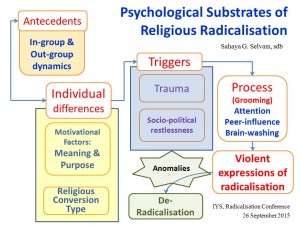 On 26th September, the Institute of Youth Studies at Tangaza University College organised a conference on the theme of radicalisation. The conference was well attended – there were over 300 participants. The speakers included representatives from the Ministry of Education, Kenya, and Department of Security.
I presented a paper too on the above topic. The scope of the paper was to discuss the psychological substrates of religious radicalisation. ‘Substrates’ refer to a substance or layer that underlies something, or on which some process occurs, in particular. We focus on psychological substrates: what are the psychological factors that underpin the process of radicalisation? Radicalisation: is a process by which an individual or group comes to adopt increasingly extreme political, social, or religious ideals and aspirations that reject or undermine the existing order, […]
Post-traumatic Growth on the Road to Emmaus: Psychological reading of Lk 24:13-35
 According to Tedeschi and Calhoun, trauma is a person-event complex that threatens the existing ‘schema’ that people have in their mind. After a prolonged process of ‘rumination’, the people might not want to change their schema and thus experience PTSD. Alternatively, if they accommodate or assimilate the experience into their schema, then the result is coping or resilience respectively. On the other hand, if they ‘integrate’ the adverse experience into their schema by reframing it then the outcome is wisdom.
Basing itself on Tedeschi and Calhoun’s model of posttraumatic growth, the present paper reads the story of the two disciples on the road to Emmaus as a process of dealing with a traumatic experience – the death of the Messiah and the disappearance of his body. Jesus listens to their version of the […]