Reflection for 11th Sunday in Ordinary Time – Cycle A
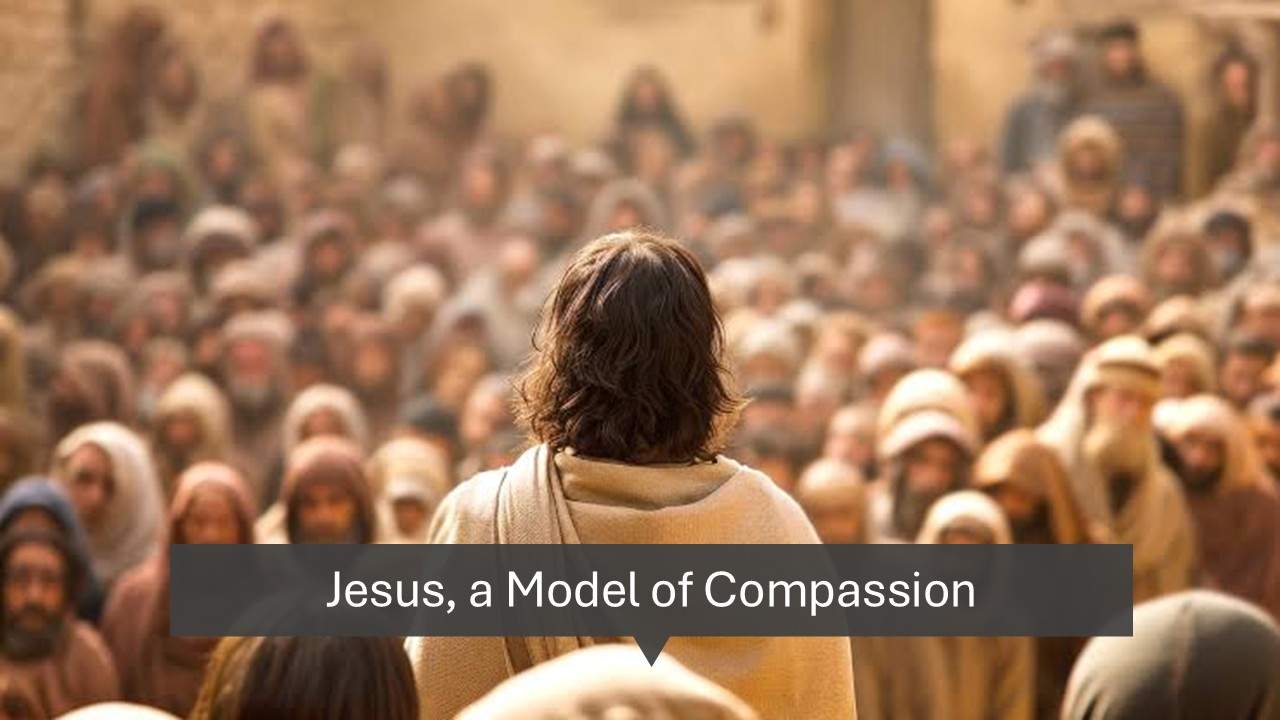
Can you recall an occasion in the recent past when you were moved with compassion for someone or for a group of people. What did you see? How did you feel? And what did you do about it?
Did you stop with just seeing? If you just saw someone in difficulty and did not feel anything and did nothing about the situation, then you did not even feel a sense of compassion or empathy. If you did feel something, but didn’t do anything about it, then you felt an empathy and that is it. But if you did feeling empathy and reached out to them, then, you were “moved” by compassion.
The Gospel today tells us, “When Jesus saw the crowds he felt sorry for them because they were harassed and dejected, like sheep without a shepherd…. He summoned his twelve disciples” and send them out (Mt 9:36-37).
This seems to be a pattern in the way Jesus practices compassion in the Gospel narratives. His compassion is expressed in three steps: (1) he sees, (2) he feels, (3) he does something: Mk 6:34, Mt 14:14, Mk 8:2, Mt 20:34, Mk 1:40-42, Lk 7:13-15, Lk 19:41-44.
This pattern mirrors God’s own way of acting in the Old Testament. In Exodus 3:7-8, God tells Moses: “I have seen the misery of my people… I have heard their cry… I know their sufferings, and I have come down to deliver them.” And in the first reading of today, Moses reminds the people of Israel (Ex 19:2-6) of how God carried them on eagle’s wings and brought them to himself.
Interestingly, contemporary psychologists (like Paul Gilbert) studying compassionate behaviour among people, attest that empathy is different from compassion. Empathy is feeling with another person. Compassion, on the other hand, goes one step further. Compassion is empathy translated into action. A compassionate person like Jesus sees, feels, and responds.
Step 1. Seeing people who suffer.
Many people saw the crowds at the time of Jesus. The religious leaders saw them. The merchants saw them. The Roman authorities saw them. But Jesus saw them differently. He saw beyond appearances. He saw their hearts.
The first lesson of today’s Gospel is that compassion begins with seeing.
If we are not moved by compassion towards suffering of people, maybe it is because we not seeing them. we don’t notice them.
We live in times when we spend a lot of time looking at screens more than faces, profiles more than persons, statistics and numbers rather than reality. Yet Jesus teaches us to look deeply. Every person we meet carries a sacred story. And there are people who are suffering.
The Gospel says that Jesus saw people as “sheep without a shepherd.” This is not an insult. It is a recognition that many people lack direction, meaning, and guidance. One of the deepest human needs is the need for purpose. People can survive many hardships if they know why they are living. Without purpose, even success can feel empty. Are we able to see people who are lost either because of lack of purpose, or on account of lack of opportunity that prevents them from seeing possibilities.
Step 2. Feeling Empathy
The Greek word translated as compassion (splagchnizomai) suggests a deep, visceral response; it is an instinctive movement at the gut level. Jesus does not merely observe human suffering; he is moved by it. His ministry arises not from duty but from a heart touched by the condition of people.
Jesus goes on to use an agricultural image: “The harvest is plentiful, but the labourers are few.”
The problem is not the scarcity of opportunities for God’s kingdom. The harvest is already abundant. The challenge is the shortage of people willing to imitate Him in his compassion.
There are others who notice the suffering of someone, and do feel a deep sense of empathy, but feel helpless, because they say they have no resources to be able to reach out.
Before sending out the disciples, Jesus instructs them to pray. Mission begins not with activity but with discernment and dependence on God. They don’t need any financial resources. They need passion and commitment.
Step 3. Acting on Empathy by reaching out
This time Jesus himself is not reaching out. He is motivating others to join his mission. Because the harvest is plenty, Jesus engages his disciples to expand his mission.
Jesus’ style of mission is well captured elsewhere in his parable of the Good Samaritan (in Lk 10:30-35). The Samaritan came near the wounded man, and when he saw him, he was moved with compassion. He uses what he had at hand to reach out to the wounded man: the oil, the vinegar, and the mount. Then he seeks the services of the inn keeper. Then he does follow up the next day.
Today, Jesus looks at our world with the same compassionate eyes. He sees the confusion, the loneliness, the violence, the environmental destruction, the anxiety, and the searching hearts of people. And then he turns to us and says: “I am sending you.”
May we have eyes that truly see. May we have hearts that are moved with compassion. And may we have the courage to become labourers in God’s abundant harvest.