For homily at the beginning of the liturgy: CLICK HERE.
With today’s liturgy, we have begun the Holy Week, as it is called in English. In other languages, it is referred to as the Great Week. Yes, indeed it is the great week. A week which marks the climax of the incarnation, it marks the celebration of the paschal mystery: passion, death, and resurrection of Jesus – the pillars of our faith.
During this week, we listen to the passion narratives on two occasions. On Palm Sunday, as we have done today, and again on Good Friday. Every year, the Good Friday passion narrative comes from the Gospel of John – Chapters 18 and 19. On Palm Sunday, however, every year we listen to the narrative from one of the synoptic gospels according to the liturgical cycle of Year A, B, and C. Today we have listened to the narration from the Gospel of Matthew (Mt 26:14-27:66).
A long homily is not called for on this day. However, I would like to draw your attention to three unique aspects of the passion narrative of Matthew so that we get engaged with the passion of the Lord, and to live the depth of the meaning of this Holy Week.
1. Judas Iscariot‘s Acknowledgement of Jesus’ Innocence
All the gospels acknowledge with humility and some embarrassment that it was one of the Twelve who betrayed Jesus. Unlike Mark and Luke, Matthew alone narrates Judas’ remorse after the condemnation of Jesus. Luke follow up the story of Judas to the Acts of the Apostles (1:18) and refers to Judas’ death that occurs in a strange manner.
In the Gospel of Matthew, Judas throws the thirty pieces of silver on the temple floor, confesses to the chief priests and elders saying, “I have sinned in betraying innocent blood,” and subsequently he takes his own life. This introduces a profound psychological process in Judas: acknowledgement of not only the betrayal, but also a moral awareness which ends in despair.
Judas teaches us that recognising sin is not yet salvation; despair closes the door that repentance would open.
Matthew also links the event of betrayal to the fulfilment of prophecy of Jeremiah (though echoing Zechariah), the chief priests’ use the money to buy the “Field of Blood” as a burial ground for foreigners. This adds to the irony of their religious hypocrisy. They are aware of the ritualistic impurity of putting the money back in the temple treasury, but they cannot acknowledge the injustice in condemning a just man to death.
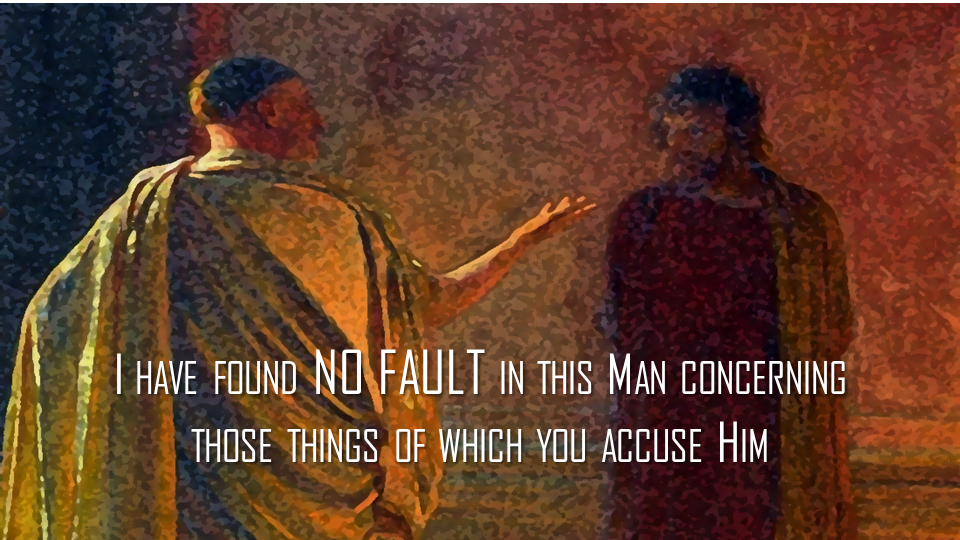
2. Pilate‘s defence of Jesus, assisted by his Wife
Matthew uniquely includes in the narrative a brief but striking episode of Pilate’s wife, who sends a message during the trial: “Have nothing to do with that righteous man, for I have suffered much because of him today in a dream.” (Mt 27:19). In the context of the Gospel of Matthew, dreams signal divine communication. In the episode of Pilate’s wife again God speaks defending the innocence of Jesus, and this time through a gentile and that too, a woman. Let us take note of the paradox here, a pagan woman discerns what religious leaders refuse to see. This acts as the background to Pilate’s own declaration of innocence of Jesus and washing of hands.
The Gospel says, “When Pilate saw that he was not succeeding at all, but that a riot was breaking out instead, he took water and washed his hands in the sight of the crowd, saying, “I am innocent of this man’s blood. Look to it yourselves.” Surprisingly, the people take responsibility for the death of Jesus, they say, “His blood be upon us and upon our children” (Mt 27:25-26).
Matthew places these words on the lips of a crowd in a moment of tension, not to condemn a people across history, but to remind us how easily any of us can stand on the side of injustice.
3. Cosmic defence of Jesus’ Innocence
Matthew expands the moment of Jesus’ death with apocalyptic imagery unparalleled in the other Gospels. All the synoptic gospels mention the veil of the temple being torn. Whereas Matthew goes on (Mt 27:52-53), “The earth quaked, rocks were split, tombs were opened, and the bodies of many saints who had fallen asleep were raised.” Here there is a cosmic and end of times symbolism. The whole earth bears testimony to the death of an innocent man. It also adds to the purpose of the death of this innocent man, “many saints who had fallen asleep were raised.”
In short, in the Gospel of Matthew, we see a threefold testimony to the innocence of Jesus: firstly, Judas and the leaders of the Jews acknowledge the innocence of Jesus; secondly, gentiles, represented by Pilate assisted by his wife, bear testimony to the righteousness of Jesus; and thirdly, the whole cosmos bears testimony to the outcome of the innocent death of Jesus.
Why did the innocent man have to die? That is the question we are invited to contemplate on for the rest of the week.
We know He loved us. He loved us not with words or signs of power, but with a love that remains faithful even when rejected, misunderstood, and led to the cross. By his death he desires to raise us up to new life. Yes, “by his wounds we have been healed” (Pet 2:24; Isaiah 53:5). May we continue to contemplate this mystery in the days to come!